

Electronics are now a baseline necessity in Malawi. Smartphones for mobile banking through Airtel Money and TNM Mpamba, for USSD services, for business communication, and for social coordination. Laptops for university students at UNIMA, Mzuzu University, and CBU completing coursework and remote assignments. Accessories, chargers, and devices that keep all of it running through load shedding and daily use.
The demand for electronics in Malawi is real, growing, and largely unserved by any formal infrastructure. Smartphone penetration in urban areas — Lilongwe, Blantyre, Mzuzu, Zomba — has grown significantly over the past five years. Young Malawians buy and replace phones regularly. Students, professionals, and small business owners all need reliable devices. The demand is not the problem.
The problem is that the connection between buyers and sellers is still largely informal, and informal markets create systematic problems for both sides.
What the Informal Market Costs Buyers
For buyers in Malawi's current informal electronics market, the risks are concrete and well-known. A Facebook Marketplace listing or WhatsApp offer has:
- No way to verify seller credibility before payment — a well-designed profile and a quick response are indistinguishable from a legitimate seller or a scam.
- No recourse when products do not arrive — once Airtel Money or TNM Mpamba has been sent to a personal number, recovery is practically impossible without law enforcement involvement, which rarely results in resolution for small transactions.
- No price transparency across sellers — buyers cannot compare actual prices without approaching each seller individually, making it impossible to know whether a price is genuinely competitive or artificially manipulated.
- No protection against counterfeit or substandard products — copy phones, refurbished phones sold as new, and phones with hidden faults all circulate in informal channels at prices that attract buyers who do not realise what they are buying.
The people most damaged by this are not naive. They are transacting in a system that has no accountability infrastructure, not a system that rewards caution.
What the Informal Market Costs Sellers
Legitimate electronics sellers in Malawi — shop owners in Lilongwe's City Centre, Blantyre's Chichiri Mall area, and Mzuzu's Orton Chirwa Avenue — face a different but equally serious set of problems in the informal market.
They compete against bad actors who undercut prices by misrepresenting products. A seller with genuine Samsung stock at honest prices loses visible market share to listings offering "Samsung Galaxy A55" at MWK 100,000 below market. The buyer who gets burned by that listing does not distinguish between the scam seller and the legitimate seller — they conclude the whole channel is untrustworthy.
Legitimate sellers also have no mechanism to build verified credibility that carries across customer interactions. They manage scattered inquiries across WhatsApp, Facebook, phone calls, and walk-in traffic simultaneously. There is no digital sales channel that does not require constant manual attention. And they cannot scale.
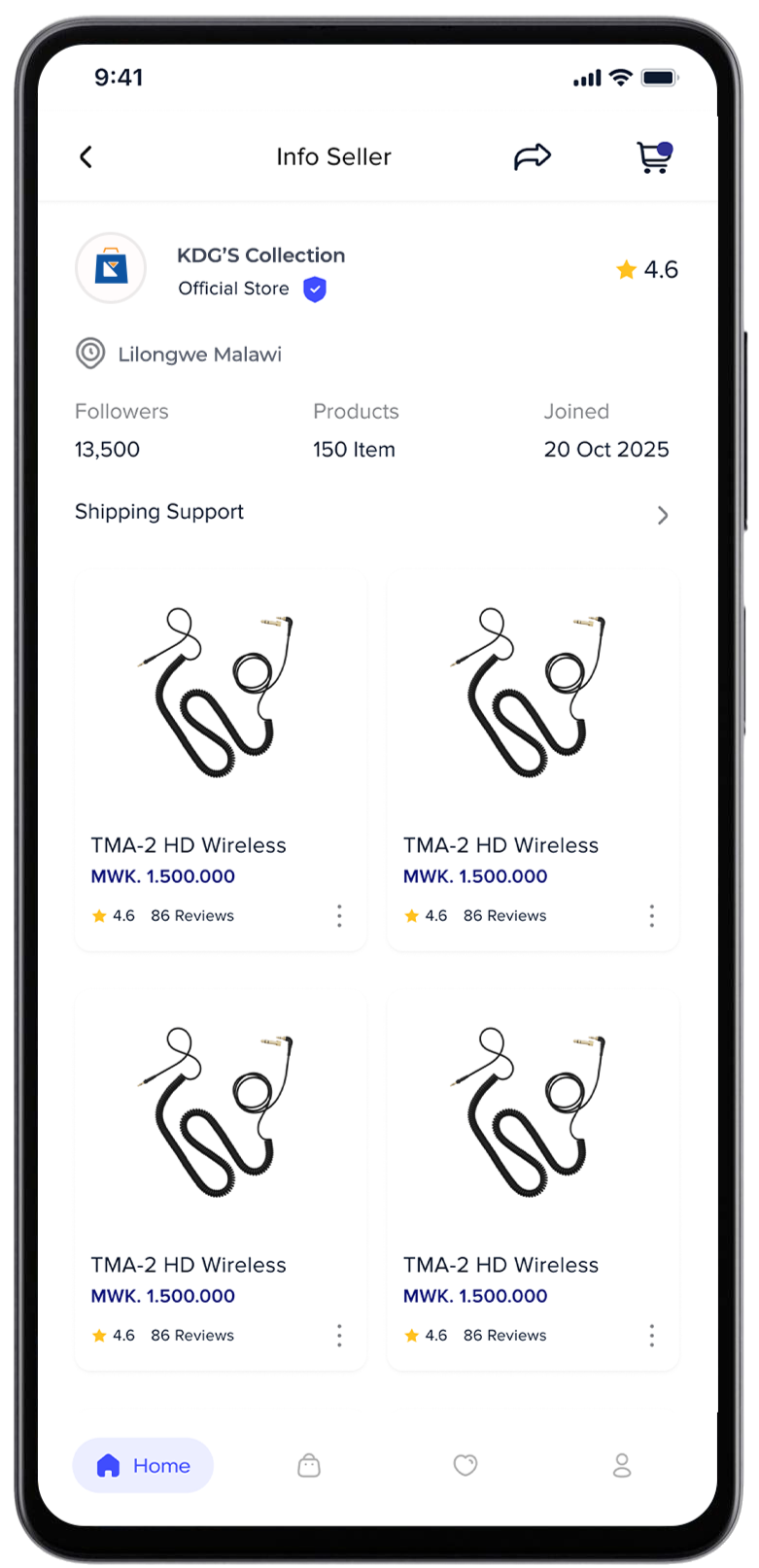
How a Trusted Marketplace Changes Both Sides Simultaneously
A trusted marketplace solves buyer and seller problems at the same time, which is why the model is more powerful than tools that only address one side.
When sellers are verified and transactions are protected through escrow, legitimate sellers have a structural advantage over bad actors. Bad actors cannot operate within a verification system — their value proposition depends on anonymity. When buyers have payment protection, they are willing to transact with sellers they have never physically met, which grows the accessible market for every verified seller on the platform.
The result is a positive cycle: more buyers trust the platform because sellers are verified, more sellers join because buyers are active and payment-ready, and the informal market's advantage — lower friction — diminishes as the formal platform becomes easier to use than managing scattered informal channels. Read more about how Techaven works and why its model is built specifically for this dynamic.
Why Malawi Is Ready for This
Malawi's digital infrastructure has developed faster than the commerce layer built on top of it. Airtel Money launched in 2012 and now processes billions of kwacha monthly. TNM Mpamba followed. Mobile data coverage has expanded across urban areas. Banking apps from National Bank, First Merchant Bank, and Standard Bank Malawi allow digital transactions. The financial infrastructure exists.
What proved to be true with mobile money — that Malawians will adopt digital financial tools when they are built for local conditions and offer real utility — applies directly to digital commerce. The friction was never technological. It was trust. Mobile money solved trust in digital payments by creating accountability between sender and receiver. A verified marketplace solves trust in product commerce by creating accountability between buyer and seller.
Informal vs Formal Electronics Market in Malawi
| Factor | Informal Market (WhatsApp/Facebook) | Techaven Marketplace |
|---|---|---|
| Seller identity | Anonymous — photo and phone number only | Verified — reviewed before listing |
| Payment risk | High — pay first, no recourse | Protected — escrow held until delivery confirmed |
| Price transparency | None — contact required for each listing | Full — listed prices, comparable across sellers |
| Product accuracy | No enforcement mechanism | Verified seller incentive to list accurately |
| Dispute resolution | None — buyer bears all risk | Structured process with transaction records |
| Seller credibility building | No portable reputation system | Platform standing, verified status, transaction history |
Techaven's model addresses this directly: verified sellers, escrow payments, in-house delivery, and a dispute process that works. The market exists. The technology exists. The appetite is clear. What Malawi has needed is a platform built specifically for how commerce actually works here — not a global platform transplanted without adjustment. Learn more about Techaven's approach and why it is designed for the Malawian context.
Frequently Asked Questions
Join the trusted marketplace for Malawi electronics
Whether you are buying or selling, Techaven provides the verification, payment protection, and delivery infrastructure that Malawi's electronics market needs.